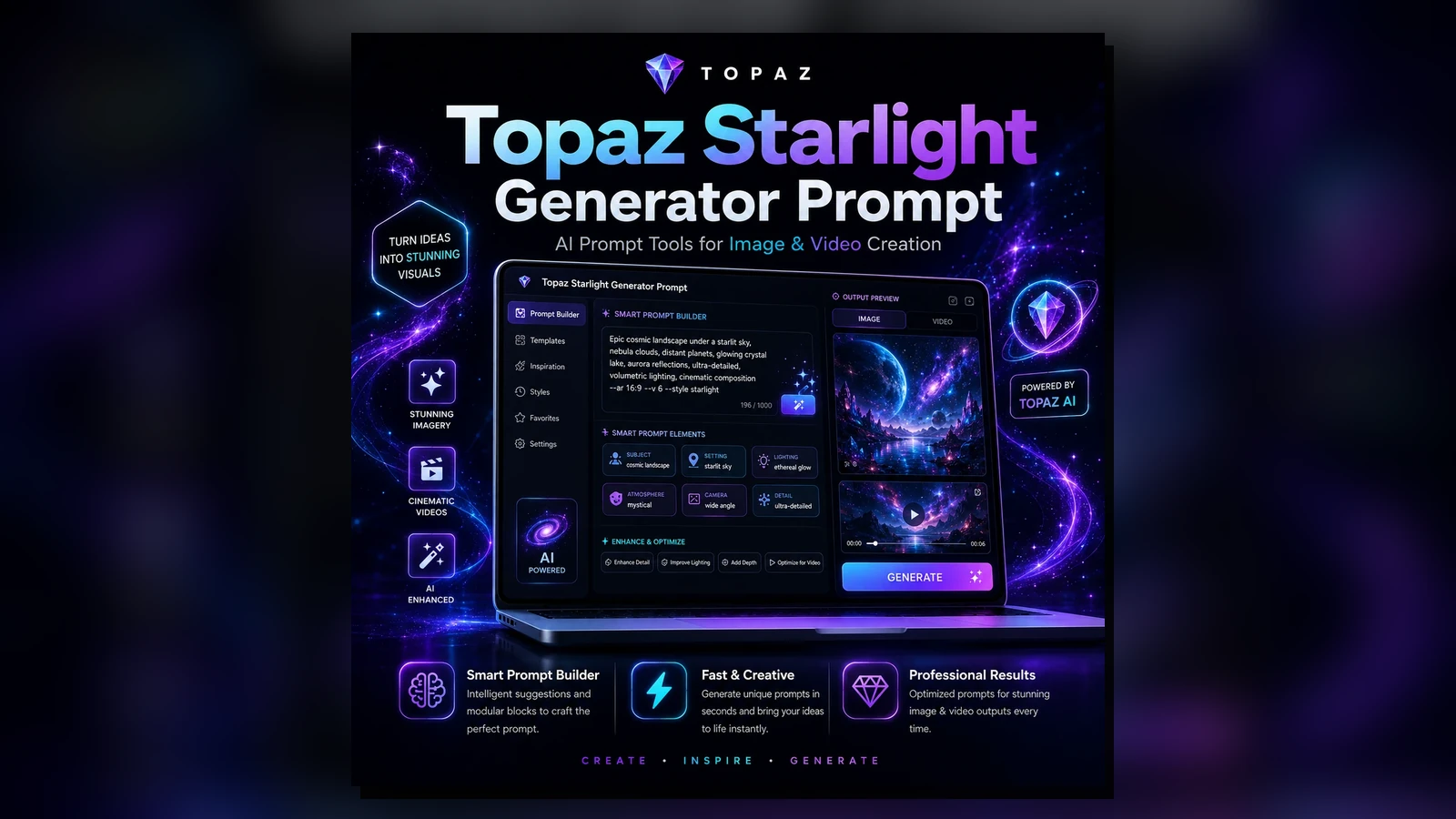
Enhancement is easier to evaluate when quality goals are explicit. This article turns restoration intent into a checklist covering preserved texture, important detail and artifacts to avoid.
Start with the creative objective
Enhancement is easier to evaluate when quality goals are explicit. This article turns restoration intent into a checklist covering preserved texture, important detail and artifacts to avoid. Before adding visual adjectives, define the job of the output: a commercial shot, social transformation, editorial image, product concept, narrative beat or enhancement pass. A strong objective acts as the priority layer for every later instruction.
Build a prompt hierarchy
Organize the prompt so the most important information appears first. For Topaz Starlight workflows, a reliable order is subject or scene objective, primary action, camera or composition, environment, lighting, style and finally restrictions. This prevents decorative language from competing with the core visual direction.
Separate stable anchors from flexible variables
Reusable prompt systems work because identity-critical details stay stable while creative variables can change independently. Keep product shape, wardrobe identity, material language or character anchors consistent. Change camera position, environment, motion intensity or lighting only when the creative brief requires it.
Use concrete visual language
Prefer visible, testable direction over abstract praise. Instead of “make it amazing,” describe the frame: controlled lateral tracking, soft backlight through haze, close perspective, restrained motion, clean negative space, or a specific material finish. Concrete language makes prompt review easier even before generation begins.
Run a prompt QA pass
Check for contradictions before generating. Confirm that the camera direction does not conflict with the shot type, the action can happen within the stated timing, the environment supports the lighting, and negative constraints do not remove essential creative freedom. If two instructions compete, choose one priority rather than keeping both.
Example prompt architecture
Subject / scene: identify the primary visual anchor
Action / change: describe what happens
Camera / composition: define viewpoint and movement
Environment: describe spatial context
Lighting: direction, quality and contrast
Style / finish: visual language and output intent
Constraints: only the failure modes that truly matter
What to read next
Continue with Negative Constraints Without Killing Creativity or review Pixverse Prompting for Stylized Social Video for another production angle.